Lithium-Ion Battery Safety: Small Batteries, Big Fire Risks
Incline Village, NV — The North Lake Tahoe Fire Protection District (NLTFPD) encourages residents to use caution when charging, storing, and using lithium-ion batteries. These batteries power many everyday devices, including cell phones, laptops, cordless tools, e-bikes, e-scooters, electric vehicles, power banks, and household equipment.
While lithium-ion batteries offer convenience and performance, damaged, defective, or improperly charged batteries can pose a serious fire hazard. These fires can ignite quickly, burn intensely, and be difficult to extinguish.
Lithium Batteries Are Everywhere
Most homes contain dozens of lithium-ion batteries. As battery-powered devices become more common, incidents involving lithium-ion battery fires have increased nationwide, making safe use and storage more important than ever.
Charging Safety Matters
Many lithium-ion battery incidents occur while a battery is charging. NLTFPD encourages residents to follow these important safety practices:
- Always use the charger designed for your device or battery.
- Purchase replacement batteries and chargers from reputable manufacturers or retailers and look for UL-certified products.
- Avoid generic or universal chargers unless approved by the manufacturer.
- Charge batteries on hard, non-combustible surfaces away from combustible materials.
- Do not charge batteries while sleeping or leave them charging unattended.
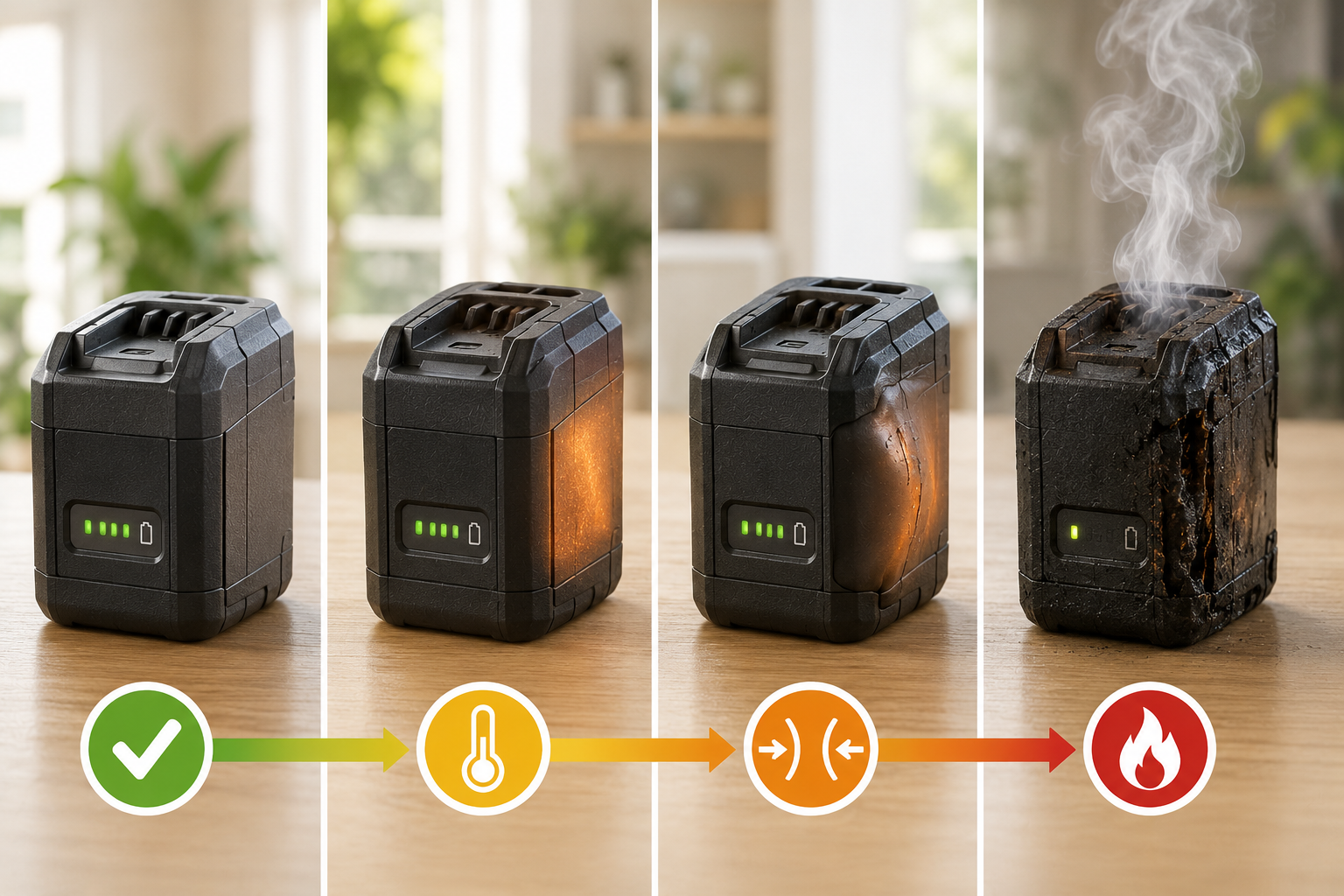
Know the Warning Signs
Lithium-ion batteries often provide warning signs before a fire occurs. If you notice any of the following conditions, stop using the device immediately and move it to a safe location if possible.
- Excessive Heat
- Bulging or Swelling
- Unusual Sounds
- Strange Odors
- Poor Performance
- Smoke
If a battery begins smoking, move away immediately, alert others, and call 911. Smoke may indicate thermal runaway—a dangerous chain reaction that can lead to fire or explosion.
Special Considerations for E-Bikes and E-Scooters
E-bikes and e-scooters typically contain larger lithium-ion battery packs than many household devices. Because of their size and energy capacity, these batteries require additional attention.
Residents should:
- Follow manufacturer charging instructions
- Avoid modifying batteries or electrical systems
- Never use damaged batteries
- Store batteries in cool, dry locations
- Have batteries inspected by qualified technicians if concerns arise
Disposal Is Important Too
Damaged, recalled, or unwanted lithium-ion batteries should never be placed in household trash or recycling bins. Improper disposal can lead to fires in garbage trucks, recycling facilities, and landfills. Residents should utilize approved battery recycling or hazardous waste disposal programs for lithium-ion batteries.
Stay Alert. Stay Safe.
A Message from NLTFPD
“Lithium-ion batteries have become part of everyday life, but safe charging, storage, and maintenance practices can significantly reduce the risk of fire. If something seems off, do not ignore it,” said NLTFPD Fire Marshal John James. "Heat, swelling, unusual odors, or smoke are all warning signs that a battery may be failing. Early recognition and proper action can prevent a serious fire and protect lives and property."
Learn More & Stay Informed
For more fire safety information, please visit the National Fire Protection Association's lithium-ion battery safety resources: https://www.nfpa.org/education-and-research/energy-transition/lithium-ion-batteries
####