Herramientas de Accesibilidad
Skip to main content

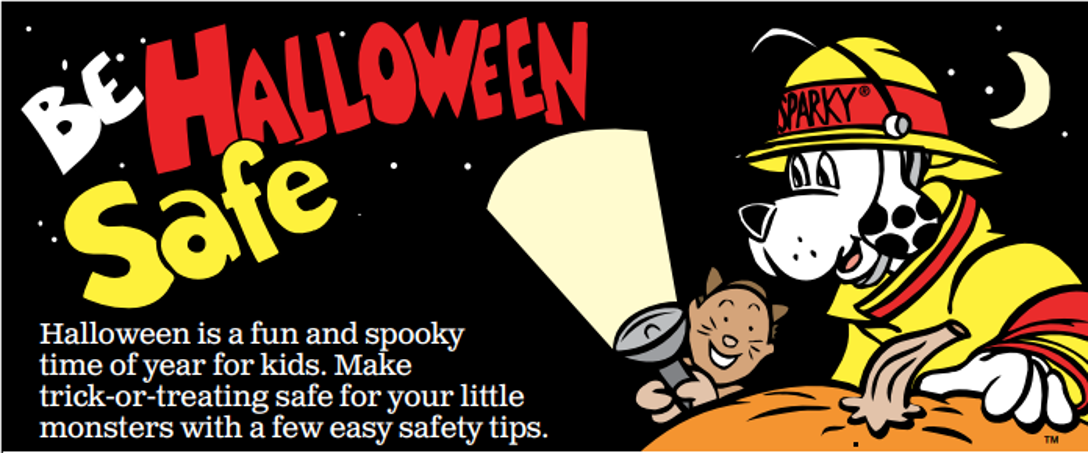
Halloween Fire Safety Tips

Incline Village, NV — As Halloween approaches, the North Lake Tahoe Fire Protection District (NLTFPD) encourages families to take a few simple precautions to help keep decorations, costumes and trick-or-treating safe.

The National Fire Protection Association (NFPA) reports that an average of 835 home structure fires per year began with decorations between 2020 and 2024. Nearly half of those fires involved decorations placed too close to a heat source, and about one-third were started by candles.

NLTFPD recommends these fire safety tips:

  • Use battery-operated candles or glow sticks in jack-o’-lanterns and other decorations.
  • Keep decorations away from open flames and heat sources, including light bulbs and heaters.
  • Choose costumes without long, trailing fabric. If a costume includes a mask, make sure the eye openings allow the wearer to see clearly.
  • Give children flashlights or add glow sticks to their costumes so they can see and be seen.
  • Teach children to stay away from open flames, including candles in jack-o’-lanterns.
  • Keep decorations clear of doors and other exits so they do not block escape routes.
  • Check that smoke alarms are working.

A Message From NLTFPD

“Taking a few minutes to check decorations, costumes and smoke alarms can help families enjoy a safer Halloween,” said Fire Marshal John James.

Learn More & Stay Informed

For more Halloween fire safety information, visit: https://www.nfpa.org/education-and-research/home-fire-safety/halloween

###


NFPA_Halloween_Safety_Tips.png

North Lake Tahoe Fire Protection District Announces Conclusion of 2026 Curbside Chipping Season on October 31 and Availability of Defensible Inspections

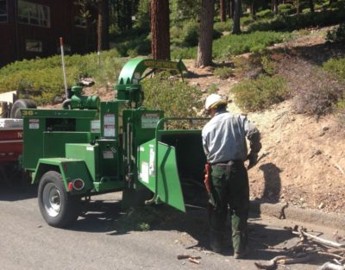
Incline Village, NV — The North Lake Tahoe Fire Protection District (NLTFPD) reminds residents that the 2026 Curbside Chipping Program will conclude on Saturday, October 31, 2026.

“Curbside chipping is an important tool in managing vegetation and maintaining defensible space around homes,” said Division Chief Powning. “Residents who plan to participate this year should submit their requests by October 31. Meeting the deadline gives our crews time to review and schedule requests before the program pauses for winter.”

How to Schedule Pickup

Residents must request pickup online through the official NLTFPD Curbside Chipping page:
🔗 www.nltfpd.org/curbside-chipping

Program Guidelines

  • Piles must be placed curbside and easily accessible
  • Branches should be no larger than 6 inches in diameter
  • Maximum pile size: 20 ft length × 6 ft height × 6 ft width
  • No stumps, roots, garbage, nails, lumber, or pinecones
  • Commercial piles are not accepted, these are piles created by a contractor or landscaping company, rather than by a homeowner
  • Chips will be left on site for residents to use safely

Requests are typically completed within one week. Timing may vary depending on fire assignments or staffing availability.

Defensible Space Inspections (DSI)

Defensible space inspections can still be scheduled by calling (775) 831-0351, ext. 8130 after October 31. Please note, inspections are subject to weather conditions.

Final Reminder

Residents have until Saturday, October 31, 2026, to submit a chipping request. After that date, the program will pause for the winter season and resume in spring 2027.

Learn More & Stay Informed

For more information or to submit your request, please visit: www.nltfpd.org/curbside-chipping

###


A_crew_member_stands_beside_a_green_chipper_and_a_small_pile_of_branches_at_the_edge_of_a_residential_road._Trees_and_cleared_vegetation_are_visible_in_the_background.jpg

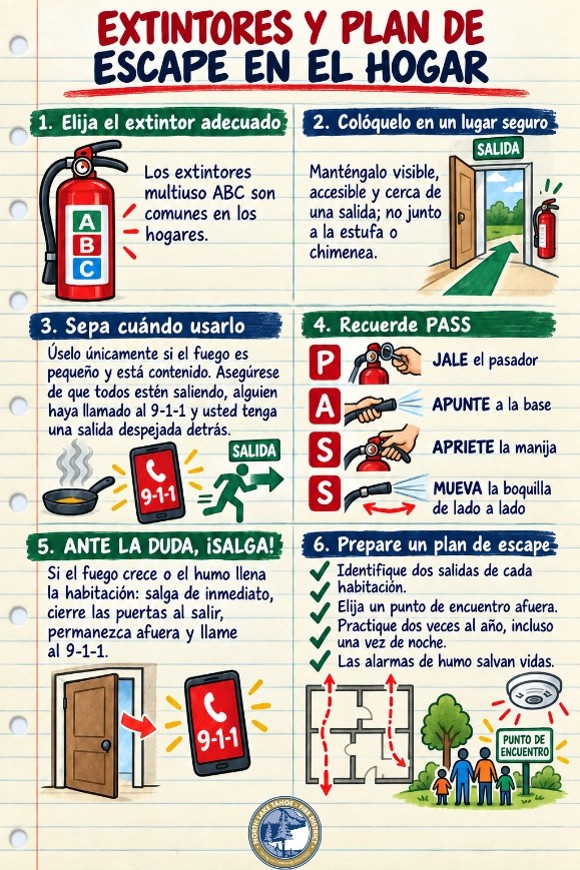
EXTINTORES Y PLANES DE ESCAPE: SEPA CUÁNDO ACTUAR Y CUÁNDO SALIR

Incline Village, NV — Un extintor portátil puede ayudar a controlar un incendio pequeño, pero no sustituye las alarmas de humo en funcionamiento ni un plan de escape del hogar que se haya practicado. El Distrito de Protección contra Incendios de North Lake Tahoe (NLTFPD) recomienda que los residentes sepan cómo y cuándo utilizar un extintor, teniendo siempre como prioridad que todas las personas salgan de manera segura.

Elija el extintor adecuado

Los extintores portátiles están clasificados según el tipo de incendio que pueden apagar:

  • Clase A: Materiales comunes como madera, papel, tela, caucho y muchos plásticos.
  • Clase B: Líquidos inflamables como gasolina, aceite, pintura y algunos solventes.
  • Clase C: Equipos eléctricos energizados.
  • Clase D: Metales combustibles, como magnesio y sodio.
  • Clase K: Aceites y grasas de cocina que suelen encontrarse en cocinas comerciales.

Los extintores multiuso de Clase ABC se utilizan comúnmente en los hogares. Elija un extintor certificado por un laboratorio de pruebas reconocido a nivel nacional, que sea lo suficientemente grande para controlar un incendio pequeño, pero fácil de manejar.

Los extintores deben mantenerse visibles y fácilmente accesibles a lo largo de una ruta normal de salida. No coloque el extintor junto a una estufa, chimenea u otra posible fuente de incendio donde las llamas o el humo puedan impedir que lo alcance. Revise regularmente el indicador de presión y reemplace o dé mantenimiento al extintor de acuerdo con las instrucciones del fabricante.

Sepa cuándo utilizar un extintor

Solo intente utilizar un extintor cuando:

  • El incendio sea pequeño, esté contenido y no se esté propagando.
  • Las demás personas estén saliendo de la vivienda.
  • Alguien haya llamado al 9-1-1.
  • La habitación no esté llena de humo.
  • Tenga una ruta de escape despejada detrás de usted.
  • Se sienta capaz y seguro al utilizar el extintor.

Recuerde PASS

Al utilizar un extintor, recuerde la palabra PASS, por sus siglas en inglés:

  • Pull: Jale el pasador.
  • Aim: Apunte hacia la base del fuego.
  • Squeeze: Apriete la manija lenta y uniformemente.
  • Sweep: Mueva la boquilla de lado a lado.

Aunque parezca que el incendio se ha apagado, salga del edificio y espere a que el departamento de bomberos confirme que el área es segura.

Prepare un plan de escape del hogar

Un incendio puede propagarse rápidamente, dejando solo unos minutos para salir después de que suene una alarma de humo. Cada hogar debe tener un plan que incluya:

  • Dos salidas de cada habitación, cuando sea posible.
  • Un punto de encuentro al aire libre, ubicado a una distancia segura de la vivienda.
  • Alarmas de humo en funcionamiento dentro de cada dormitorio, fuera de cada área para dormir y en todos los niveles de la vivienda.
  • Ayuda para niños pequeños, adultos mayores, personas con discapacidades y cualquier persona que pueda necesitar asistencia para evacuar.
  • Un plan para evacuar a las mascotas de manera segura, sin retrasar su propia salida.
  • Simulacros de escape por lo menos dos veces al año, incluyendo uno durante la noche.

Asegúrese de que las ventanas y puertas abran fácilmente y que las rutas de escape permanezcan despejadas. Una puerta cerrada puede ayudar a disminuir la propagación del humo, el calor y el fuego. Al salir, cierre las puertas detrás de usted si puede hacerlo de manera segura. Una vez afuera, permanezca afuera. Nunca regrese a un edificio en llamas para recuperar pertenencias, mascotas ni por ningún otro motivo. Llame al 9-1-1 desde el exterior e informe al operador si alguna persona pudiera permanecer adentro.

Un mensaje de NLTFPD

“Los extintores pueden ser útiles cuando un incendio es pequeño y está contenido, pero la seguridad personal siempre debe ser la prioridad”, señaló el Jefe de Prevención de Incendios John James. “Si existe alguna duda sobre si puede controlar el incendio de manera segura, salga, permanezca afuera y llame al 9-1-1”.

Obtenga más información y manténgase informado

Para obtener más información sobre los extintores y los planes de escape del hogar, visite: https://www.nfpa.org/education-and-research/home-fire-safety/fire-extinguishers

###
 

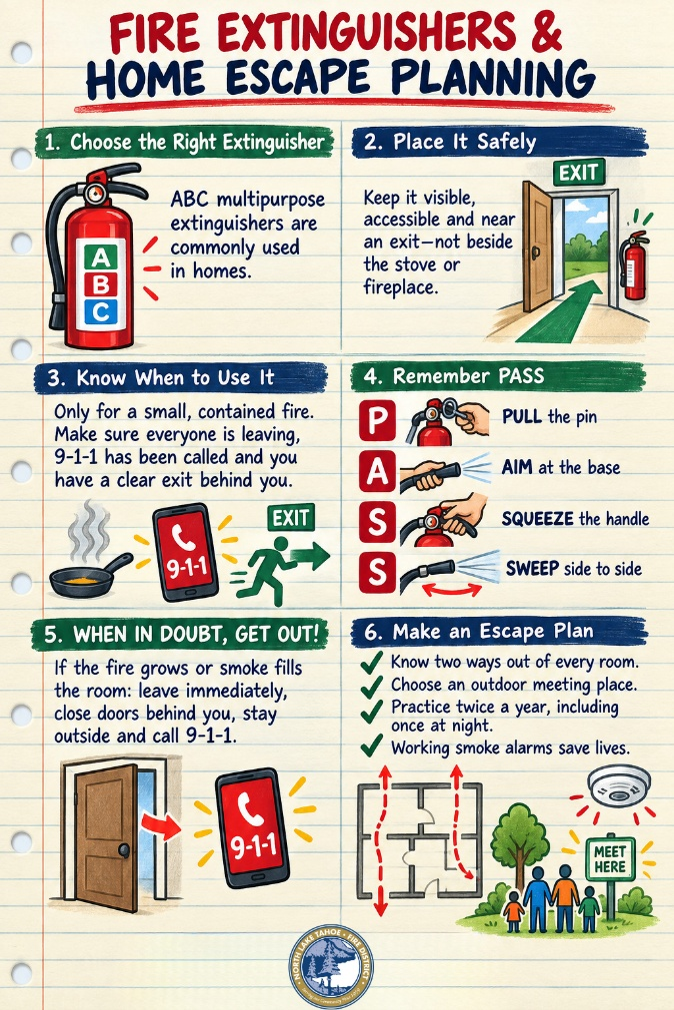
NLTFPD Fire Extinguisher Home Escape Planning Spanish

FIRE EXTINGUISHERS AND ESCAPE PLANNING: KNOW WHEN TO ACT AND WHEN TO GET OUT

Incline Village, NV — A portable fire extinguisher can help control a small fire, but it is not a substitute for working smoke alarms or a practiced home fire escape plan. The North Lake Tahoe Fire Protection District (NLTFPD) encourages residents to understand how and when to use a fire extinguisher—and to make getting everyone safely outside the first priority.

Choose the Right Extinguisher

Portable fire extinguishers are labeled according to the types of fires they are designed to extinguish:

  • Class A: Ordinary materials such as wood, paper, cloth, rubber and many plastics.
  • Class B: Flammable liquids such as gasoline, oil, paint and some solvents.
  • Class C: Energized electrical equipment.
  • Class D: Combustible metals, such as magnesium and sodium.
  • Class K: Cooking oils and fats commonly found in commercial kitchens.

Multipurpose Class ABC extinguishers are commonly used in homes. Choose an extinguisher listed by a nationally recognized testing laboratory that is large enough to control a small fire but easy to handle.

Extinguishers should be visible and readily accessible along a normal exit path. Do not place one next to a stove, fireplace or other potential fire source where flames or smoke could prevent you from reaching it. Check the pressure gauge regularly and replace or service the extinguisher according to the manufacturer’s instructions.

Know When to Use an Extinguisher

Only attempt to use an extinguisher when:

  • The fire is small, contained and not spreading.
  • Everyone else is leaving the home.
  • Someone has called 9-1-1.
  • The room is not filled with smoke.
  • You have a clear escape route behind you.
  • You are comfortable operating the extinguisher.

Remember PASS

When operating a fire extinguisher, remember the word PASS:

  • Pull the pin.
  • Aim low at the base of the fire.
  • Squeeze the handle slowly and evenly.
  • Sweep the nozzle from side to side.

Even if the fire appears to be out, leave the building and wait for the fire department to confirm that the area is safe.

Have a Home Fire Escape Plan

A fire can spread quickly, leaving only a few minutes to escape after a smoke alarm sounds.

Every household should have a plan that includes:

  • Two ways out of every room, when possible.
  • A designated outdoor meeting place that is a safe distance from the home.
  • Working smoke alarms inside every sleeping room, outside each sleeping area and on every level of the home.
  • Assistance for young children, older adults, household members with disabilities and anyone who may need help evacuating.
  • A plan for safely evacuating pets without delaying your own escape.
  • Practice drills at least twice a year, including one at night.

Make sure windows and doors open easily and that escape routes remain clear. A closed door may help slow the spread of smoke, heat and fire. When leaving, close doors behind you if it is safe to do so. Once outside, stay outside. Never return to a burning building for belongings, pets or any other reason. Call 9-1-1 from outside and tell the dispatcher if anyone may still be inside.

A Message from NLTFPD

“Fire extinguishers can be valuable when a fire is small and contained, but personal safety must always come first,” said Fire Marshal John James. “If there is any doubt about whether you can safely control the fire, get outside, stay outside and call 9-1-1.”

Learn More & Stay Informed

For more information about Fire Extinguishers and home fire escape plan visit: https://www.nfpa.org/education-and-research/home-fire-safety/fire-extinguishers

###
 

NLTFPD Fire Extinguisher Home Escape Planning